
作者:百年不渡 分类:未来幻想 点击:686次 下载:3583607次 大小:70M 日期:2026-08-26
战国
国庆马新陆路关卡通关人次创新高 9月学校假期料交通繁忙_我的网站

一 | 马新陆路关卡的交通预料在来临9月份,预料将非常繁忙,图为新山关卡。(取自BSI面子书)(新加坡讯)这个月国庆日长周末期间,兀兰和大士关卡的通关人次突破54万,再创新高。有鉴于9月学校假期将在这个周末开始,新加坡移民与关卡局表示,这个周五到下周日,两个关卡的交通预料将非常繁忙。
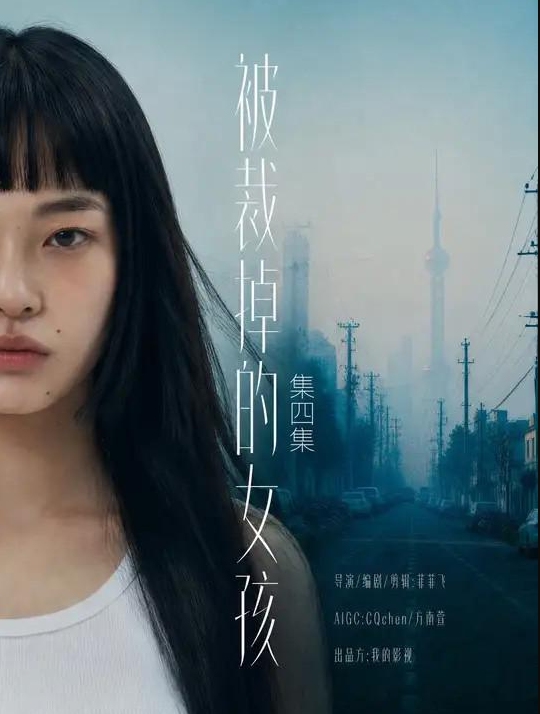
Fang Taozi, an AI-generated character who stars in the hit AI short drama series The Girl Who Was Fired, has posted lifestyle vlogs, launched social media accounts, shared her breakfasts, workouts and pets, landed brand deals and has a fanbase.
Since the drama debuted on short video platform Douyin on June 12, it has accumulated 200 million views. Fang's Douyin account has attracted more than 400,000 followers.
Fans interact with her as if she were a real celebrity, creating fan edits, discussing fictional relationships and building a community around her imagined life.
This raises a question that has become increasingly urgent for the entertainment industry: Does Fang Taozi represent the first generation of AI celebrities? The answer depends on how "celebrity" is defined, said Zhang Peng, a cultural researcher and associate professor at Nanjing Normal University, in an interview.
If celebrity status is measured by public attention, emotional connection and commercial value, Fang appears to meet many of the criteria. She has fans, a personal brand and even advertising opportunities.
Whether AI can truly become stars depends not on the technology itself, but on their ability to forge genuine emotional connections with audiences and sustain their appeal over time, added Zhang.
However, Shi Wenxue, a Beijing-based cultural critic, argues that AI stars have indeed emerged, but they should be viewed as part of the broader lineage of virtual idols.
From the 1958 US virtual musical group Alvin and the Chipmunks to Hatsune Miku, Luo Tianyi and the hyper-realistic digital human Liu Yexi, virtual performers have existed in various forms for decades.
From the perspective of how she is created, Fang Taozi represents a technological advance. Her emergence is largely a product of the current economic environment of the film and television industry.
The rise of AI performers has also triggered concerns among human actors, especially those working in smaller productions.
Human performers bring personal experience, emotional interpretation and unpredictability - qualities that remain difficult to reproduce. But for industries that require large volumes of affordable content, AI characters offer obvious advantages: They do not age, can work continuously and can be customized for different audiences.
AI short dramas are cheaper, faster and free from the risks associated with human performers, raising concerns over the future of lower-level entertainment jobs in areas such as short dramas, advertising, background acting and voice work, said Zhang.
In Shi's view, beneath the debate lies a familiar tension: technological efficiency versus the threat of displacement for human workers.
The question is not whether AI will completely replace actors, but which parts of acting and entertainment can be automated, he noted.
Rather than presenting an AI figure only as a digital image, Chinese platforms appear to be building complete entertainment ecosystems around AI characters, including dramas, social accounts, fan interactions and commercial partnerships.
China's AI stars have grown out of the audience's desire for emotional companionship, while Hollywood's AI experiments have been shaped by industry battles over efficiency and costs, noted Zhang.
According to Shi, Fang Taozi's sudden popularity is, in many ways, a reflection of audience psychology. Whether they are moviegoers, fans or casual viewers, audiences have grown weary of formulaic content, scripted fan service, predictable performances and fragile celebrity personas. An idol like Fang Taozi offers an alternative: She cannot be involved in scandals, play diva or break character, and her persona can be adjusted to meet audience demands. But the model also comes with risks, particularly the limitations of its creators and the potential for excessive commercialization.
。

二 | 《8视界新闻网》报导,移民与关卡局说,由于车龙从大马回堵到新加坡,在国庆日长周末期间开车出行的公众需要花长达3个小时的时间才能通关。

三 | 当局建议公共可以考虑乘搭跨境巴士出行。移民与关卡局也提醒出行者预留额外的等候时间,并恳请他们同移民与关卡局人员合作,遵守交通规则,不要随意改换车道。当局会毫不犹豫地采取行动,对付不配合指示、在关卡违法的出行者。

四 |
Current article:http://b7n61e.michengyuraochixun.buzz/q74/4qfriv.html
Published on:20:05:28


